
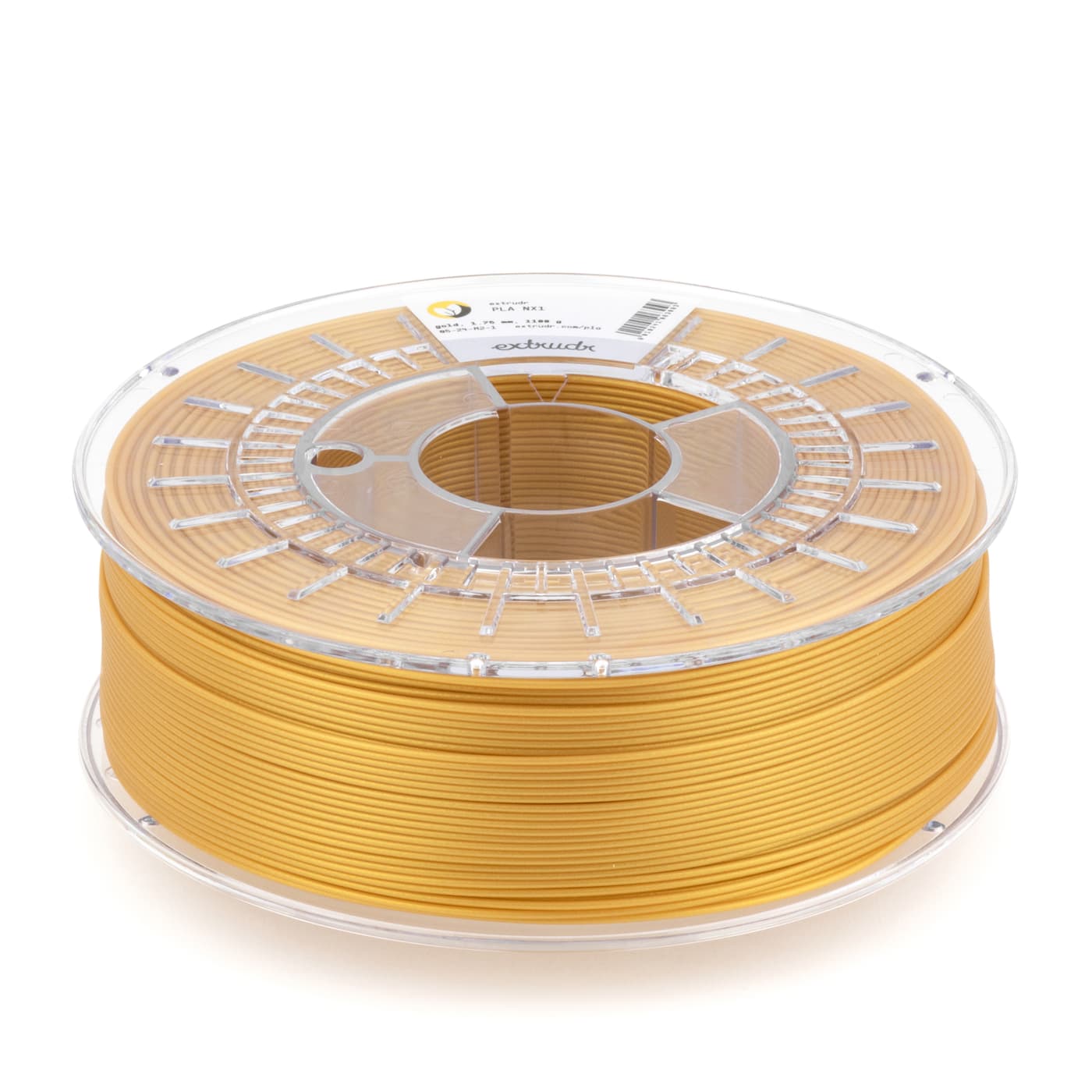
PLA is a bio-based material and one of the most commonly used filaments in 3D printing. It is ideal for a wide range of applications, from prototyping and modelling to creative DIY projects and everyday prints. The raw material is compliant with REACH, RoHS, FDA and EU 10/2011 standards, making it a safe and responsible choice for makers and creators alike. Thanks to its low printing temperature, PLA Basic is extremely easy to print and produces impressive results with a smooth, glossy surface finish. It's compatible with all standard FDM printers, as well as AMS and multi-material systems. A dependable filament that grows with your ambitions.
-40% BIO-BASED & BIODEGRADABLE
PLA Basic
SKU: 9010241063093
Material
PLA Basiccolor
gold | RAL 1036Filament diameter
1.75 mmCoil
1 kgincl. VAT
25,19 €
15,11 €
incl. VAT
25,19 €
15,11 €
In Stock
Made in Austria
Secure Checkout With


YOUR EVERYDAY FILAMENT
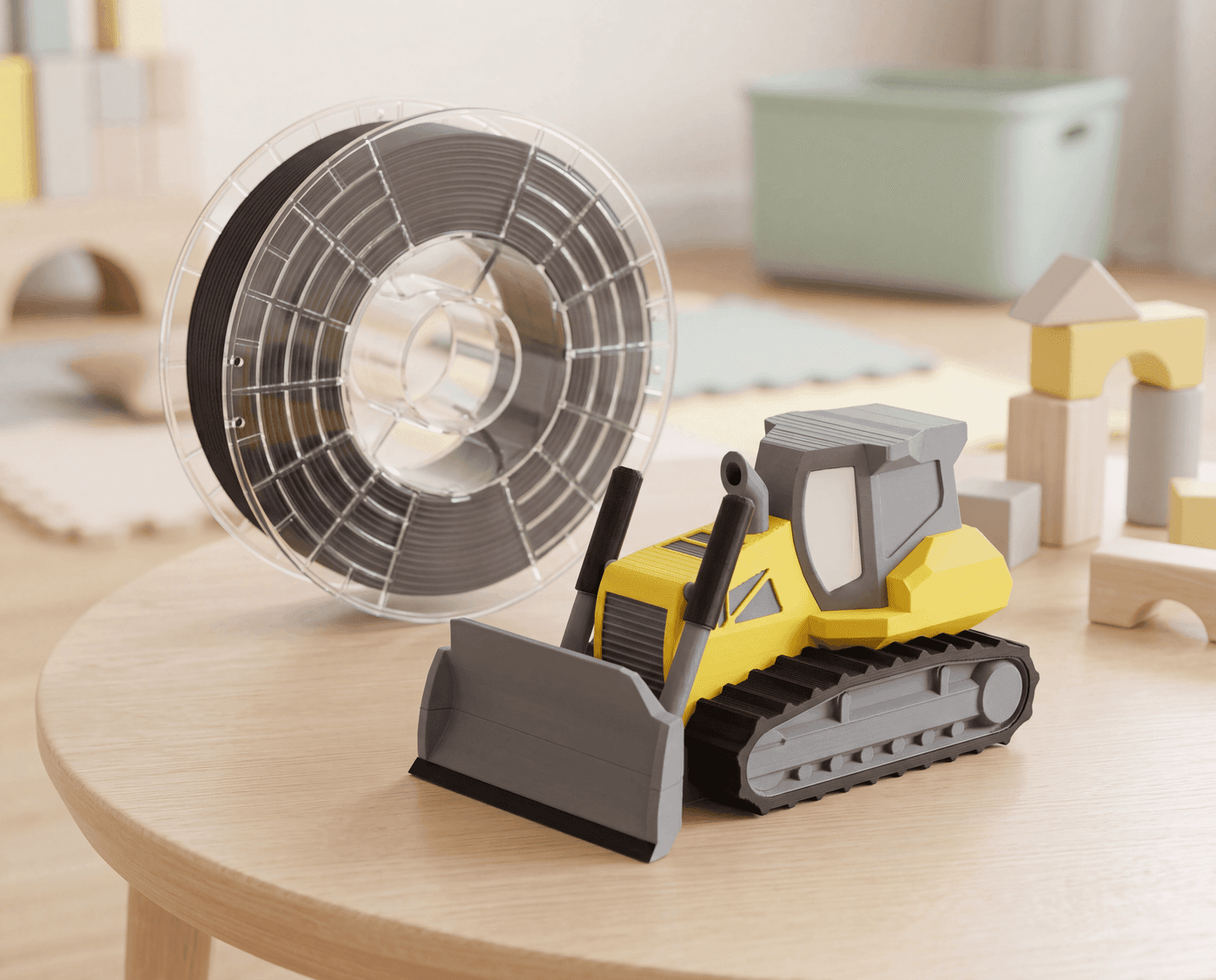
IDEAL FOR
- Hobby & DIY projects
- Prototyping and Concept Models
- Beginners and Entry-level Users
PLA Basic Highlights

EASY TO PRINT
Low printing temperature and minimal warping make it extremely user-friendly. Perfect for beginners and reliable for professionals.

PRECISE, PREDICTABLE RESULTS
Consistent material properties from spool to spool mean what worked on your last print works again on your next one, no surprises, no re-tuning.
BIO-BASED & BIODEGRADABLE
Made from renewable raw materials and compliant with EN 13432. A more sustainable choice for everyday 3D printing.
LOW WARPING & RELIABLE ADHESION
Minimal shrinkage ensures stable prints and strong bed adhesion, even without a heated bed.

FITS ANY PRINTER, ANY SYSTEM
From standard FDM printers to AMS and multi-material setups, Extrudr filament is built to work reliably with the printer you already own.

MADE IN AUSTRIA
From the Austrian Alps, every Extrudr spool is manufactured with care, precision and strict EU standards.
Showcases
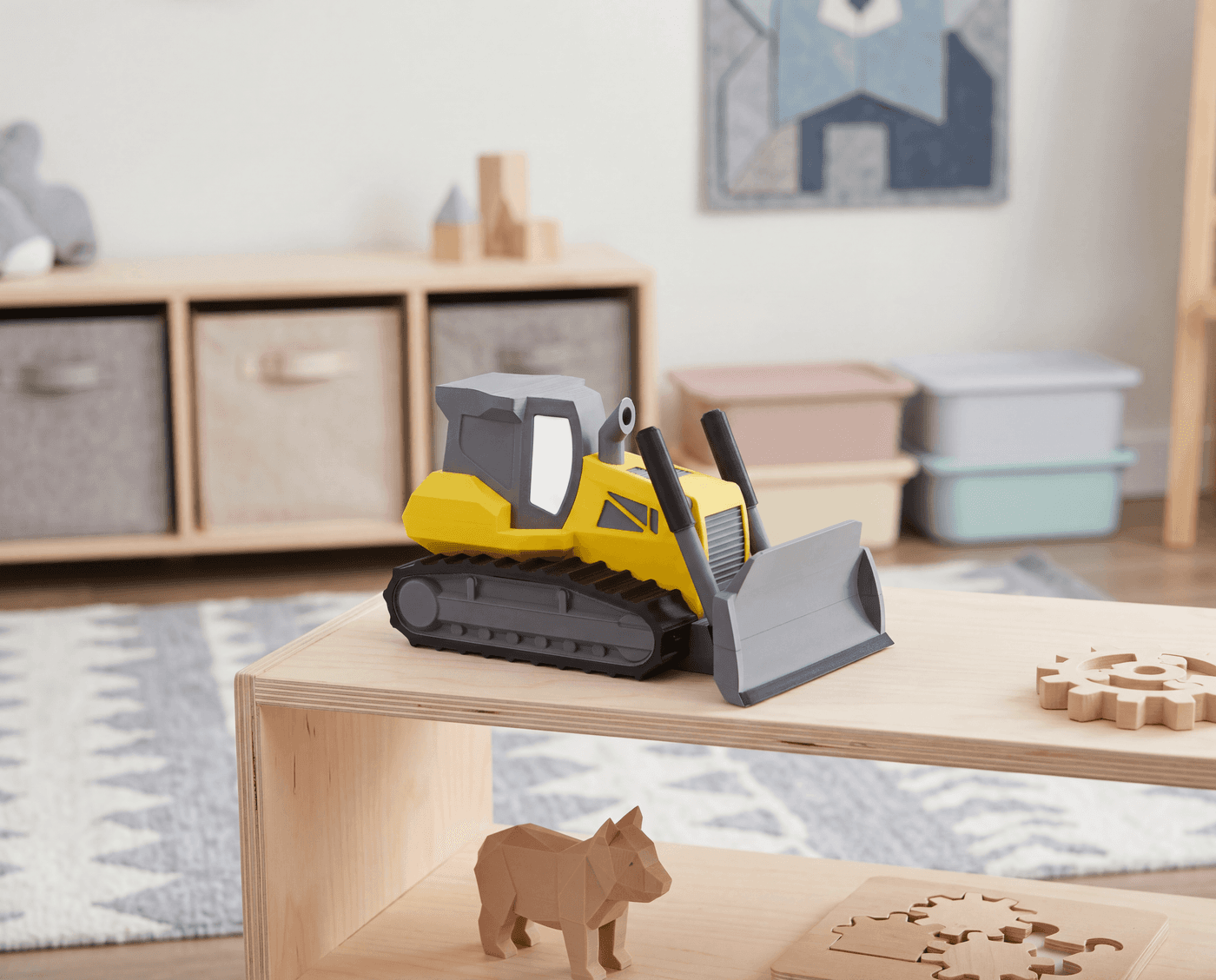
Kids Toy Tractor

Prototype for a Liquid Rocket Engine
©TU Wien Space Team

Figurine from Breaking Bad
@Dano98
Nozzle temperature 200–230 °C
Build plate temperature 20–60 °C
Surface preparation Not required
Speed 20–200 mm/s
Cooling fan 30–100 %
Enclosed chamber required No
Hardened nozzle required No
Max. volumetric flow rate 21 mm³/s
Recommended settings for printers with a 0.4 mm nozzle. Max. 50% layer height. Optimal settings may vary between printers and are also dependent on environmental factors.
Drying temperature 50 °C
Drying time Not required
Our material profiles make printing easier and more reliable. The profiles are perfectly optimised for Extrudr filaments and deliver perfect results straight away. Simply select your printer and material, import the profile into your slicer, and you’re ready to go.
| Mechanical Properties | Method | Value | Rating |
|---|---|---|---|
| Tensile modulus (Young's modulus) | ISO 527-1 | 3500 MPa | Excellent |
| Tensile strength at yield | ISO 527-1 | 45 MPa | Typical |
| Tensile stress at break | ISO 527-1 | 45 MPa | Very Good |
| Elongation at break | ISO 527-1 | 5 % | Typical |
| Flexural modulus | ISO 178 | 3600 MPa | Excellent |
| Flexural strength | ISO 178 | 85 MPa | Very Good |
| Charpy notched impact strength (+23°C) | ISO 179-1eA | 5 kJ/m² | Typical |
| Charpy notched impact strength (-30°C) | ISO 179-1eA | 3.5 kJ/m² | Typical |
| Charpy unnotched impact strength (+23°C) | ISO 179-1eU | 18 kJ/m² | Typical |
| Charpy unnotched impact strength (-30°C) | ISO 179-1eU | 15 kJ/m² | Typical |
| Thermal Properties | Method | Value | Rating |
|---|---|---|---|
| Heat deflection temp. (HDT/B) — 0.45 MPa | ISO 75-1 | 60 °C | Typical |
| Heat deflection temp. (HDT/A) — 1.8 MPa | ISO 75-1 | 56 °C | Typical |
| Vicat softening temp. (VST/B50) | ISO 306 | 59 °C | Typical |
| Melting point (Tm) | ISO 3146-C | 155 °C | Typical |
| Glass transition temp. (Tg) | ISO 11357-1 (DSC) | 60 °C | Typical |
| Melt flow rate (MFR) — 210°C/2.16 kg | ISO 1133-1 (210°C/2.16 kg) | 6 g/10 min | Typical |
| Melt volume rate (MVR) — 235°C/5.0 kg | - | 30 cm³/10 min | Outstanding |
| Thermal decomposition temp. | - | 240 °C | Typical |
| CLTE — flow direction | - | 0.7 cm/cm/°C | Very Good |
| Physical Properties | Method | Value | Rating |
|---|---|---|---|
| Density | ISO 1183-1 | 1.24 g/cm³ | - |
| Water absorption (saturation, 23°C) | - | 0.7 % | - |
| Mould shrinkage | ISO 294-4 | 0.4 % | Very Good |
| Special Properties | Method | Value | Rating |
|---|---|---|---|
| UV resistance | - | Limited | - |
| Chemical resistance | - | Limited | - |
PRINTING & COMPATIBILITY
PLA Basic is recommended for print speeds of 20–200 mm/s, with a maximum volumetric flow rate of 21 mm³/s. For faster printing, we recommend PLA HS, which is formulated for high-speed printing up to 1000 mm/s.
PLA Basic is compatible with all standard FDM printers on the market.
Yes. PLA Basic is fully compatible with AMS (Automatic Material System) solutions, including the Bambu Lab AMS. Its precise diameter tolerance and consistent material properties ensure reliable feeding and smooth multi-material printing. Compatible with all major multi-material systems on the market.
MATERIAL PROPERTIES
PLA Basic is not recommended for permanent outdoor use. Due to its lower heat resistance, prolonged exposure to direct sunlight and high temperatures can cause warping or deformation over time.
Yes. PLA Basic is well suited for post-processing. It can be sanded to a smooth finish, painted with acrylic or spray paints and bonded using standard super glue or epoxy. For best results when sanding, start with a lower grit and work up gradually.
CERTIFICATION COMPLIANCE
PLA Basic is compliant with EU 10/2011 and FDA standards. Any printed item intended for food contact needs to be separately certified.
The compliance of our filament applies to the raw material, not the finished printed part. If you require a certified part for food contact, medical, industrial or any other regulated application, the printed item itself must undergo a separate certification process. This typically involves testing by an accredited third-party laboratory. Requirements vary depending on the intended use and applicable standards.
CARE & STORAGE
Store PLA Basic in a dry room at room temperature (18–27°C / 65–80°F). Stored neatly, it is protected from dust and sunlight.
When stored correctly, PLA Basic has a shelf life of 2 years.
–
5
0
4
0
3
0
2
0
1
0
Latest reviews
Other customers also bought





-40% UP TO 1000 MM/S