
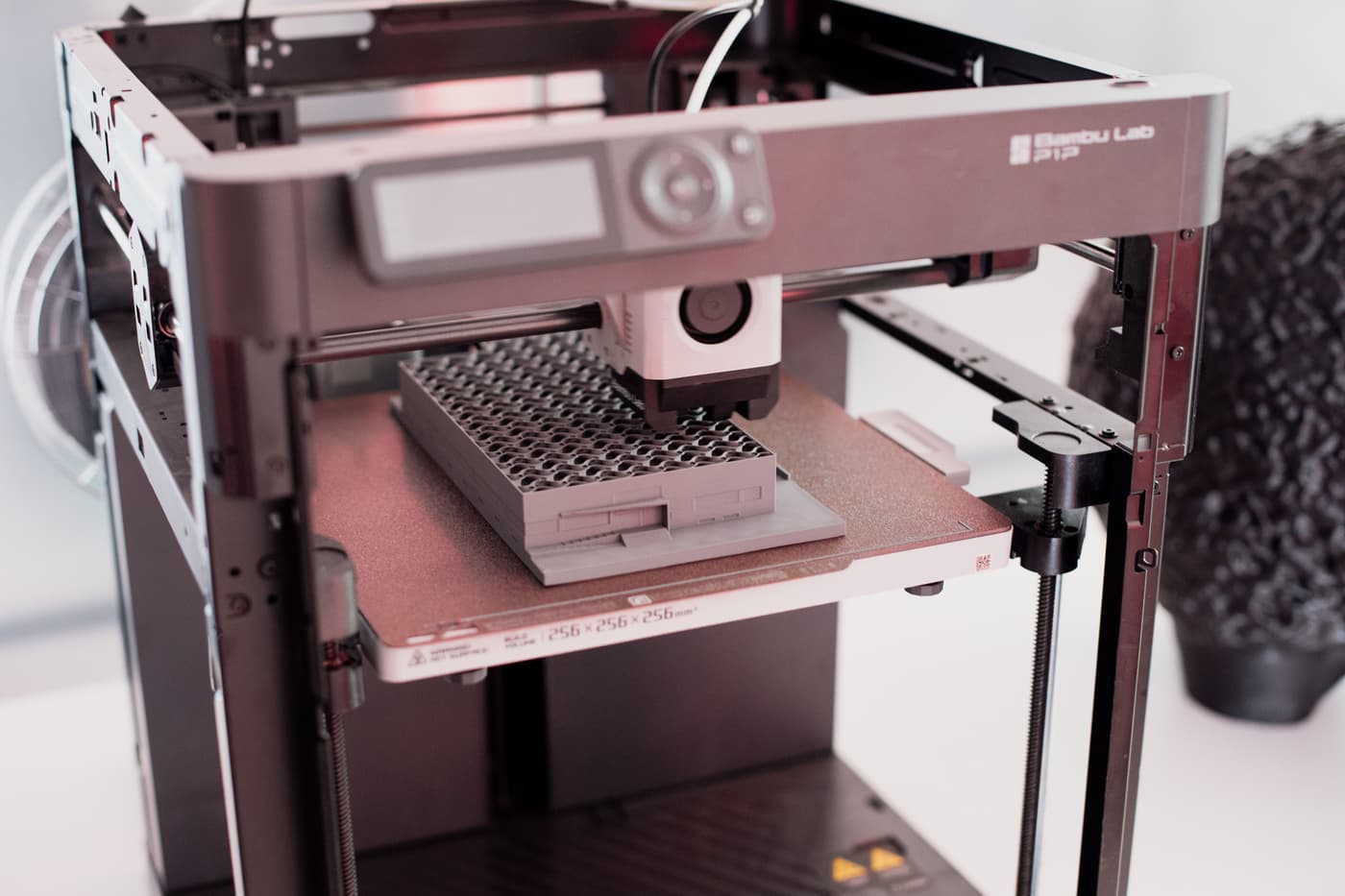
How Businesses Are Shaping the European 3D Printing Market in 2026
3D printing in Europe is entering a new phase. From engineering teams to educational institutions and manufacturing companies, an increasing number of companies are integrating FDM 3D printing into their daily workflows.
By 2026, additive manufacturing will no longer be defined primarily by prototyping or hobby use, but by its role as a reliable, flexible tool across professional environments. Based on current European market forecasts, the following five trends show how businesses are shaping the future of 3D printing.
1. Market Growth Is Driven by Professional Demand
The European 3D printing market is forecast to grow at a strong compound annual growth rate in the coming years. What stands out clearly in recent reports: growth is driven mainly by business and professional adoption, not consumer use.
Applications expanding across sectors include:
- Engineering and product development
- Manufacturing support and tooling
- Maintenance and spare part production
- Technical services
- Education and research labs
FDM remains one of the most widely used additive manufacturing technologies because it offers:
- Cost efficiency per part
- Broad material availability
- Easy integration into existing workflows
- Scalable production from prototype to small series
For companies, FDM is no longer experimental. It is operational.
2. From Prototyping to Functional, Operational Use
Additive manufacturing has matured. By 2026, 3D printing is increasingly used for functional and operational applications, not just concept validation.
Typical business use cases now include:
- Jigs, fixtures, and assembly aids
- Custom tools and adapters
- Replacement parts
- Housing components
- Testing equipment and lab supports
Automotive, aerospace, and machinery sectors already produce tens of thousands of printed parts annually, demonstrating that additive manufacturing is moving into serial and semi-serial applications.
This shift increases expectations around:
- Mechanical performance
- Long-term durability
- Batch consistency
- Reliable layer adhesion
Material reliability becomes a business-critical factor.
3. Public Investment Strengthens Business Adoption
Public funding across Europe continues to support additive manufacturing adoption. National and EU programs focus on:
- Industrial digitalization
- Research and development
- Manufacturing modernization
- Innovation networks
Institutions such as the Fraunhofer Additive Manufacturing Alliance actively bridge research and industrial implementation.
Importantly, this support benefits not only large corporations, but also:
- Small and mid-sized companies
- Technical service providers
- Research institutes
- Educational institutions
The result is a broader professional ecosystem around additive manufacturing.
4. 3D Printing Reaches More Professional Teams
Lower hardware costs, improved slicer software, and pre-configured material profiles make FDM 3D printing accessible to more professional teams than ever before.
Companies no longer need a dedicated additive manufacturing department. Instead, 3D printing becomes a decentralized tool that supports faster iteration, reduced downtime, and shorter supply chains.
Distributed manufacturing and in-house production are no longer future concepts. They are current business strategies.
5. Sustainability Becomes a Business Requirement
In business environments, sustainability is increasingly tied to operational resilience and cost efficiency.
Additive manufacturing contributes through:
- On-demand production instead of overstocking
- Reduced material waste compared to subtractive manufacturing
- Localized production closer to the point of use
- Lower logistics dependency
With increasing regulatory pressure across the EU, sustainability considerations now influence:
- Material selection
- Supplier evaluation
- Production strategy
For many companies, additive manufacturing supports both environmental goals and risk mitigation.
What This Means for Companies
These trends clearly indicate that 3D printing in Europe is becoming:
- More standardized
- More integrated into professional workflows
- More production-oriented
- More strategically relevant
Across industries, companies increasingly expect:
- Repeatable material quality
- Documented performance
- Predictable print results
- Materials suitable for functional and long-term use
Success in professional FDM 3D printing will depend less on experimentation and more on process stability, material expertise, and application-focused thinking.
By 2026, additive manufacturing is not said to replace traditional manufacturing. But it will become an essential complement across engineering, service, and production environments.
A Quick Look at the Consumer Market
While professional applications drive most of the market expansion, consumer and prosumer 3D printing continues to evolve in parallel.
Key B2C trends at a glance:
- Improved ease of use through automation and presets
- Broader access to professional-grade materials
- Continued refinement rather than disruptive growth
Based on European market forecasts (2024–2029)
Source: Mordor Intelligence – Europe 3D Printing Market (2024–2029)