
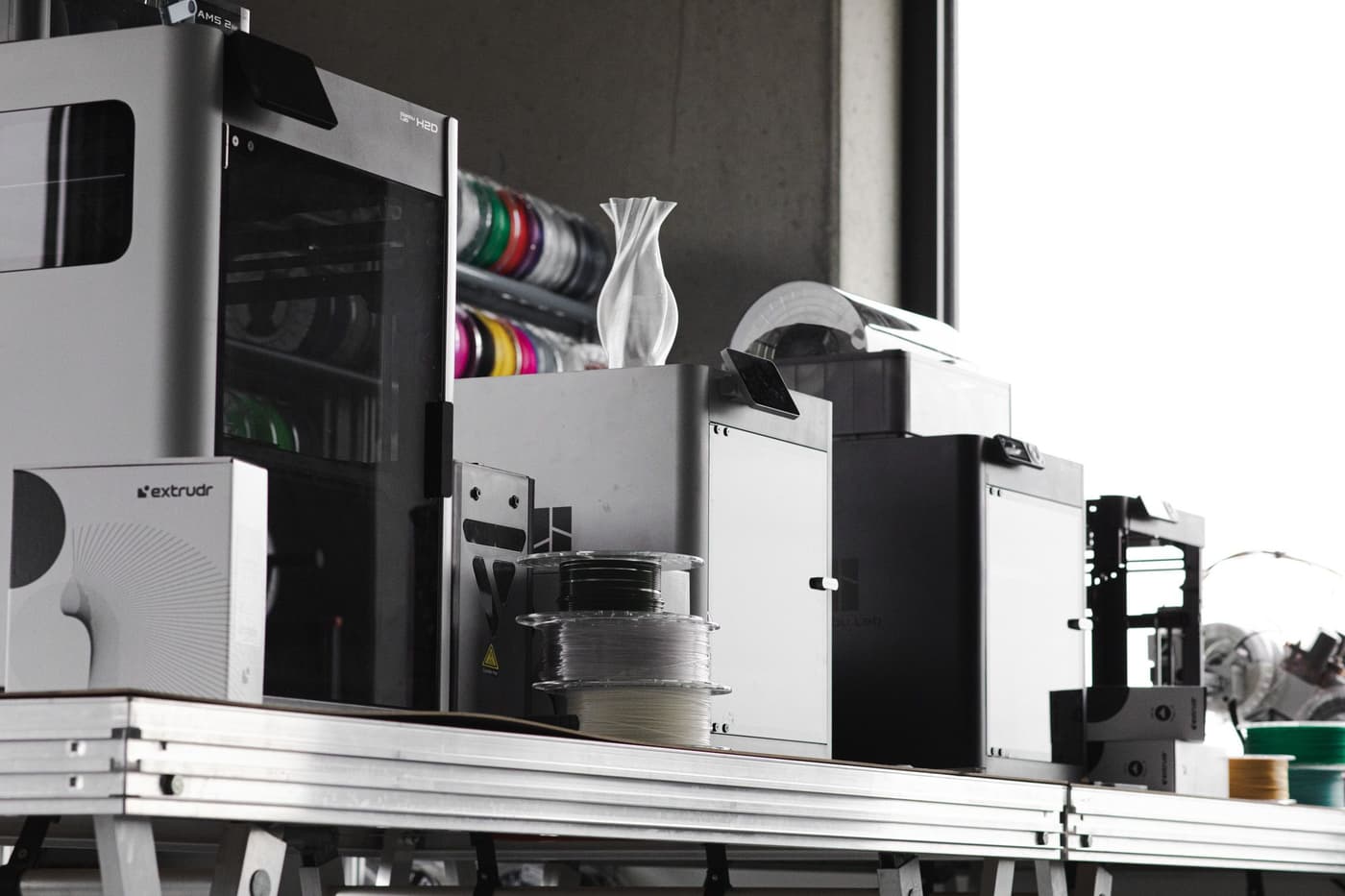
Open vs. Enclosed 3D Printers:
Choosing the Right Filament for Your Setup
When it comes to 3D printing, most people focus on the filament first.
PLA or PETG? ABS or TPU?
But there’s a step before that which often gets overlooked and it can make or break your print: What kind of 3D printer setup are you using?
Whether your printer is open or enclosed has a direct impact on how your filament behaves. And if those two don’t match, even a high-quality filament won’t deliver the results you expect.
Why Your Setup Can Change Everything
Every filament reacts differently to temperature.
Some materials are stable and forgiving. Others are sensitive and need a controlled environment to perform properly.
An open 3D printer is exposed to room conditions. Heat escapes during printing, and even small drafts or temperature changes can affect your print.
An enclosed 3D printer keeps the heat inside. It creates a more stable environment, which helps the material cool down evenly.
That difference might sound minor, but it directly affects things like:
- layer adhesion
- warping
- dimensional accuracy
So what does this mean for you? 👉 Your printer setup should always be one of the first things you check before choosing a filament.
Which Filaments Work Well with Open 3D Printers?
If you’re using an open printer, you’ll want materials that don’t react strongly to temperature changes.
Reliable filaments for open setups:
- PLA
- PETG
- PCTG
- GreenTEC
- BioFusion
These materials have low shrinkage and handle temperature fluctuations well, which makes them ideal for open printers .
In everyday printing, that means:
- fewer failed prints
- minimal warping
- consistent results without needing a closed chamber
That’s also why these filaments are commonly recommended for beginners and general-purpose printing.
When You Need an Enclosed 3D Printer
As soon as you move into more technical materials, the rules change.
Filaments that require an enclosed printer:
- ABS
- ASA
- PA12
- PC / PBT
These materials shrink more during cooling and react strongly to temperature changes .
If you print them in an open setup, the temperature drops too quickly and unevenly. The result is usually visible right away.
Typical issues include:
- warping corners
- cracks between layers
- weak layer bonding
An enclosed printer helps prevent this by keeping the temperature stable throughout the print.
If you’re working on functional or mechanical parts, this stability is essential.
Open vs. Enclosed 3D Printer: How to Decide
If you’re unsure which setup is right for you, it helps to think in terms of application.
Open printer makes sense if:
- you mainly print PLA, PETG, or similar materials
- you want a simple, flexible setup
- you focus on prototypes, visual parts, or everyday prints
Enclosed printer is the better choice if:
- you work with engineering or technical filaments
- you need strong, durable parts
- you want consistent results for functional applications
What Printer Setup Are You Using?
Are you working with an open 3D printer, or do you rely on an enclosed system for technical materials?
Understanding your setup is one of the simplest ways to improve your print quality without changing anything else.