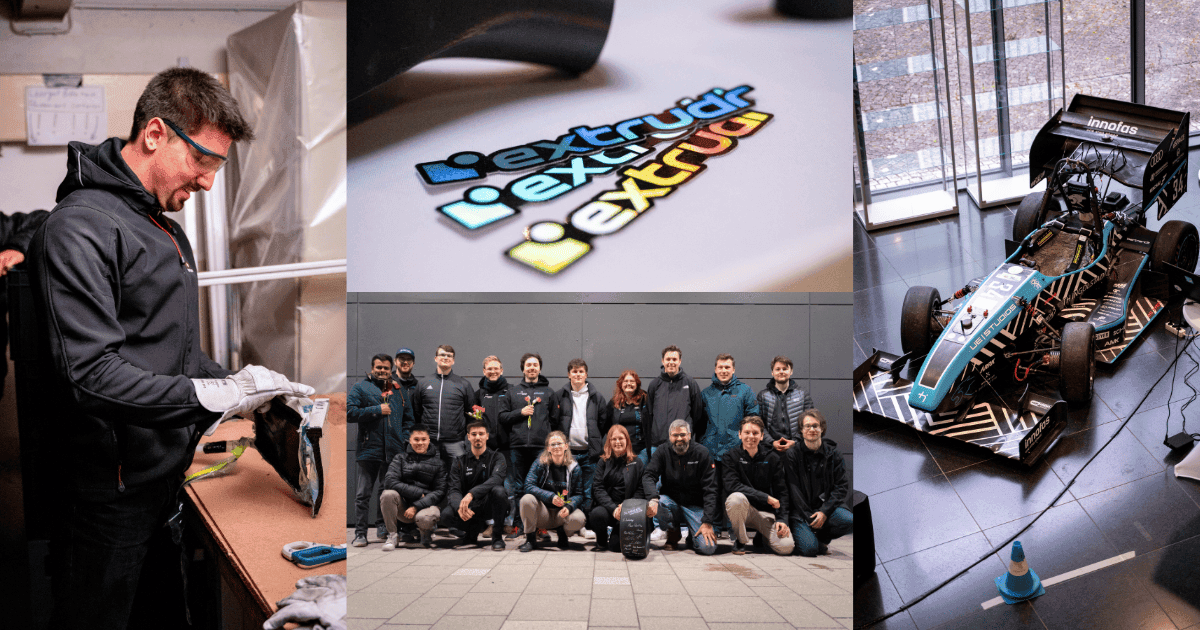

What is Formula Student?
Formula Student is an international engineering design competition where university teams from around the world develop and race their own formula-style cars. Since its inception in the US in 1981, the number of participating teams has grown to over 600 worldwide. The first German event took place in 2006.
Each team develops a new car every year, going through all key development phases – from concept and design to simulation, manufacturing, testing, and racing. The vehicles, known as "monopostos," are powered by combustion engines, hybrid systems, or fully electric drivetrains. The focus lies not only on speed but also on acceleration, lightweight construction, and aerodynamics.
Who is Schanzer Racing Electric?
Schanzer Racing Electric e.V. is a student-run association at the Ingolstadt University of Applied Sciences, founded in 2010. Their first vehicle, the SRe12 “First Lady,” laid the foundation for an impressive development journey. Currently, around 100 students from various disciplines are working on the SRe25, the team’s latest race car.
Technical Specs of the SRe24
- Top speed: 101 km/h
- Weight: 234 kg
- Range: 25 km
- Battery capacity: 7.8 kWh
- Power output: 140 kW
- Drive type: 4 in-wheel hub motors
- Chassis: Carbon monocoque
Extrudr & Schanzer Racing: High-Tech Materials on the Racetrack
Extrudr supports the Schanzer Racing Team with high-performance filaments used in various parts of the vehicle. 3D printing enables fast and cost-effective production of components with outstanding mechanical and chemical properties.
GreenTEC Pro CF: Heat Resistance & Rigidity in Racing
GreenTEC Pro CF has proven to be particularly durable and is used directly on the race car. In the 2024 season, several components made with this material successfully withstood three competitive events.
Use cases of the filament:
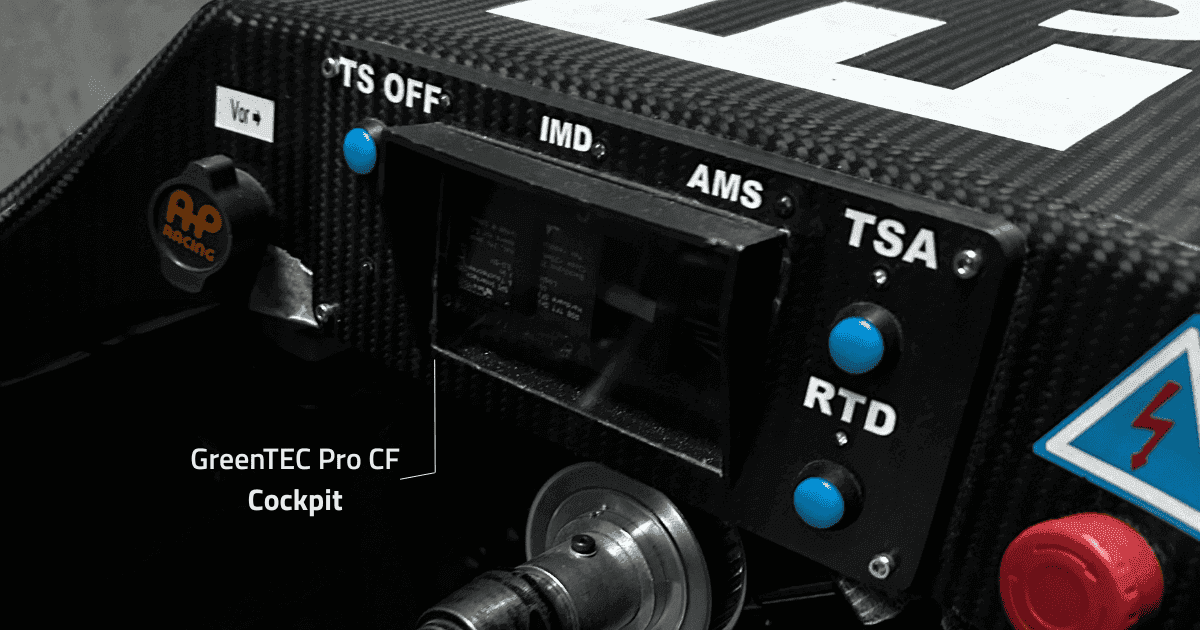
- Cockpit: Mounting interfaces for HMIs (e.g., rotary knobs, buttons, or touchpads).
- Mountings: Custom mounting solutions for sensors and electronics throughout the vehicle.
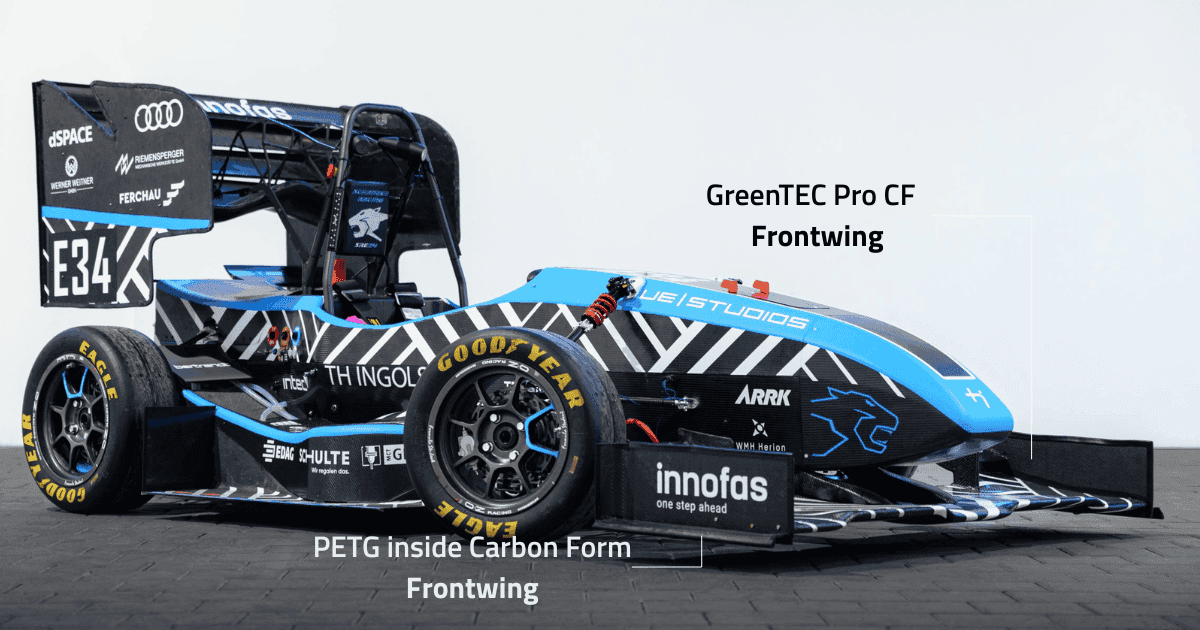
- Aerodynamic parts: Air guides, spoilers, and flaps are printed with high dimensional accuracy, minimal warping, and exceptional stiffness – ideal for aerodynamic optimization.
PETG: Excellent Mechanical and Chemical Properties
PETG is primarily used in aerodynamic and electronic applications:
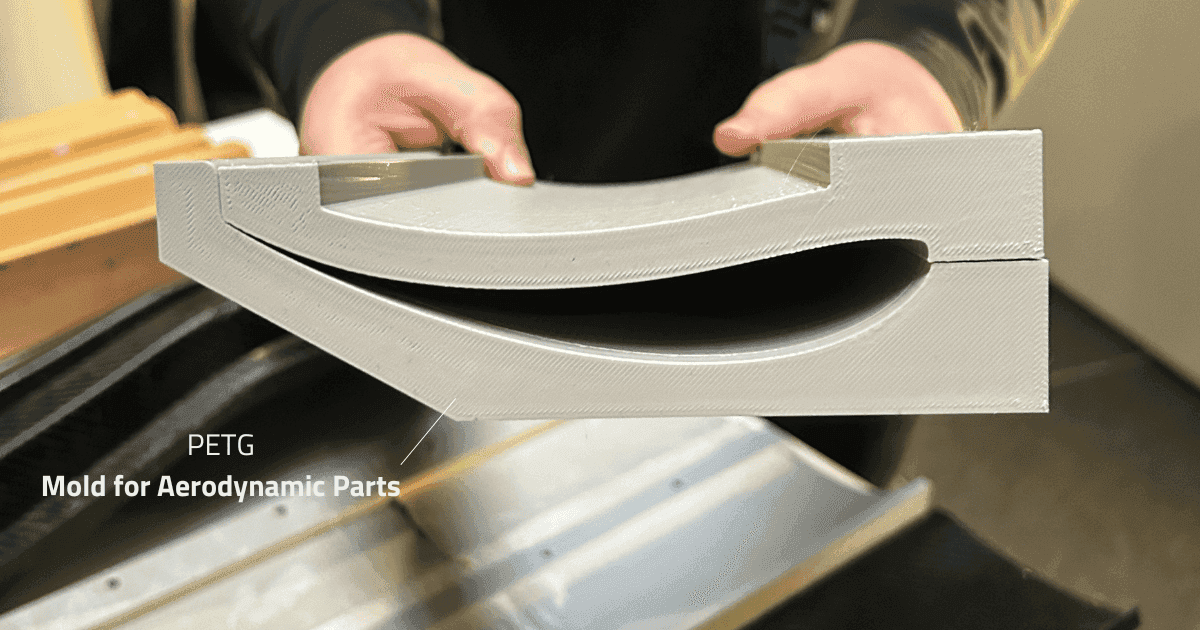
- Aerodynamics: PETG is printed, post-processed, and used as the basis for carbon fiber-reinforced components that ensure optimal airflow and downforce.
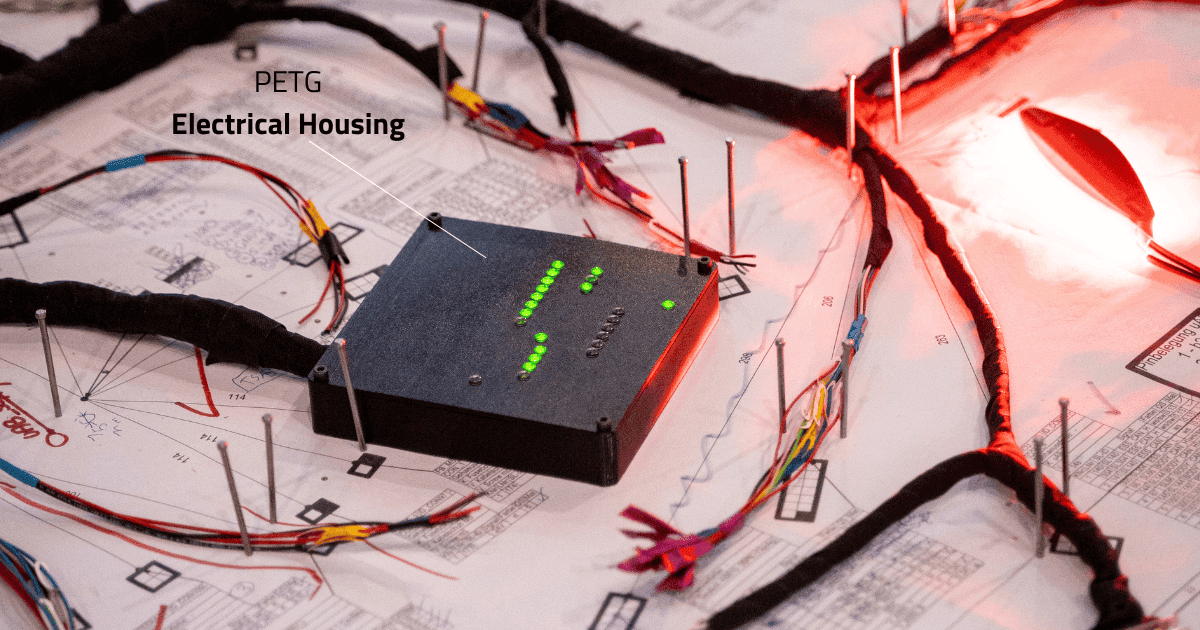
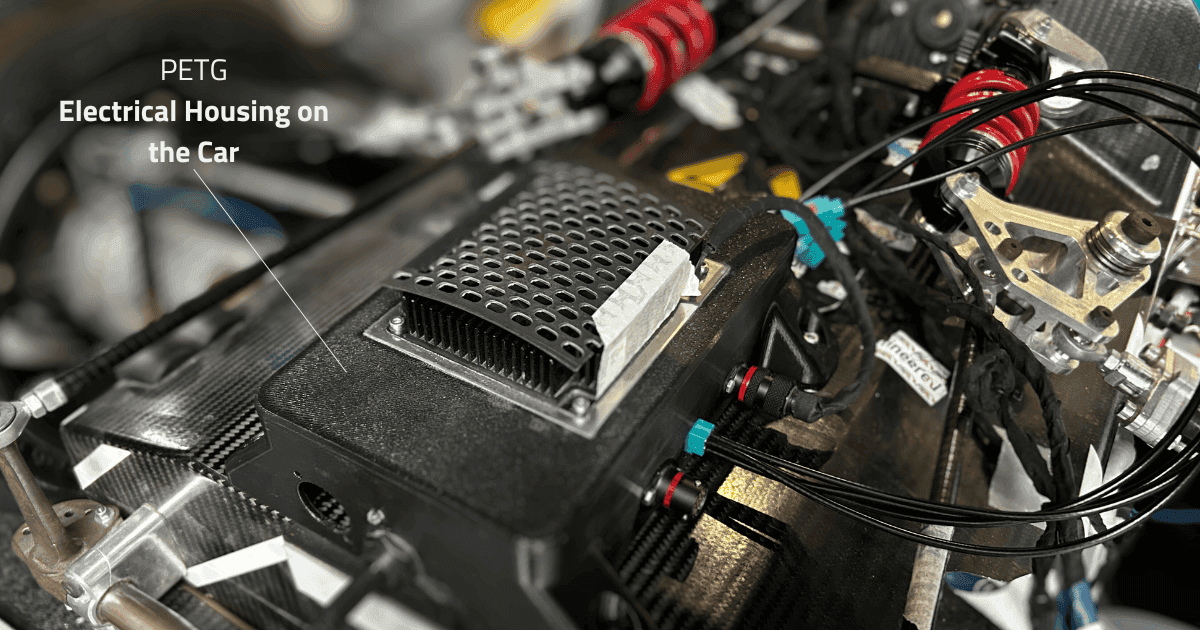
- Electronics: PETG plays a key role in manufacturing PCBs and wiring harness components, ensuring insulation from mechanical, chemical, and electrical stresses.
The Future of Our Collaboration
The partnership between Extrudr and Schanzer Racing Electric showcases how 3D printing enables innovative solutions in motorsport. With high-performance materials, weight can be reduced, production time shortened, and on-track performance maximized. We’re excited to see how GreenTEC Pro, PETG, and other advanced materials will continue to shape the future of racing!